Applying for a First Texas Driver License: Why Online Isn’t an Option
A first Texas driver license can be hard to plan for if you expect to complete the application online. The key distinction is that online tools may help you prepare, but they do not replace the required office visit. Here’s how to identify the right application path, get ready for the appointment, and avoid treating online preparation as an online application.
Why you cannot apply for a first Texas driver license online
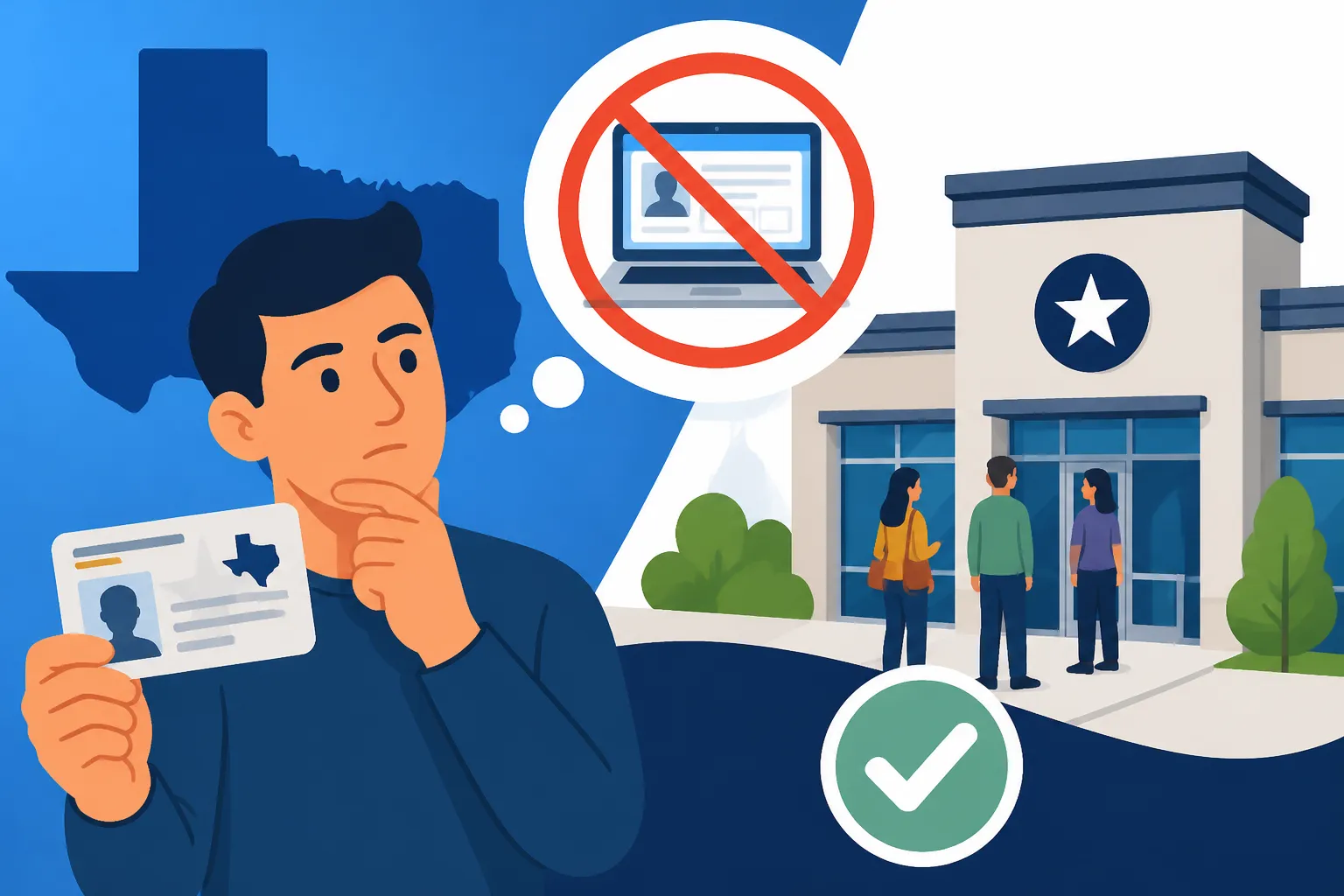
According to the Texas Department of Public Safety, new Texas residents and people obtaining a driver license for the first time must apply in person at a driver license office. That means an online account, form, course, or appointment booking cannot replace the required in-person application.
The rule affects two groups who may have different circumstances: people who are new to Texas and applying for a Texas license, and people getting a driver license for the first time. In either case, the important point is the same: you must complete the application process at a driver license office.
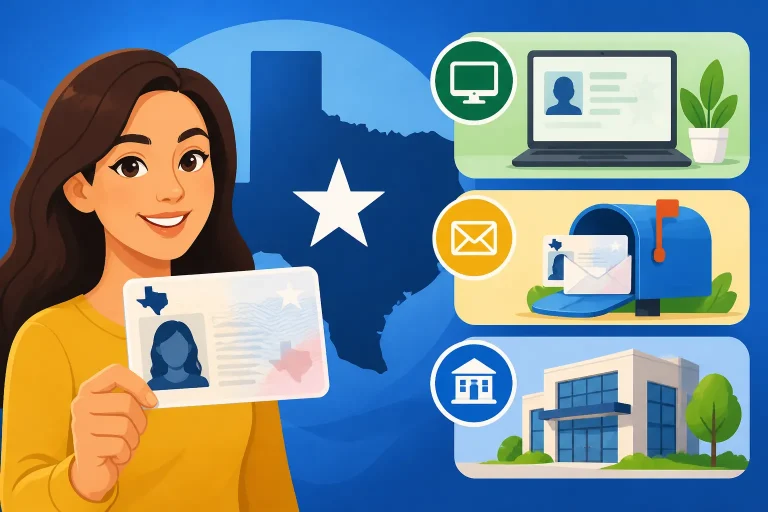
It helps to separate the parts of the process that might be handled or prepared online from the application itself. Depending on your situation and the current DPS process, online tools may help you check eligibility, manage an account, review instructions, or look for appointment information. Those steps can make the visit easier, but they are not approval to skip it.
Online preparation is not online application
People often use “apply online” to describe several different activities. They might mean filling out a form, making an appointment, uploading documents, completing driver education, or submitting the application for a license. These are not interchangeable.
For a first Texas driver license, preparation and scheduling may happen before the visit, but the application still requires an in-person appearance. If a website or account lets you complete a preliminary task, do not assume that means the state has accepted your application or that you can receive a license without going to DPS.
The distinction matters because a person can spend time preparing online and still have an unfinished application. Before relying on any online confirmation, check whether it refers to an appointment, a course, an eligibility check, or the actual license application. If you are uncertain, confirm the current instructions with the Texas Department of Public Safety.
Why the in-person visit matters
The office visit is the required part of applying, not simply a convenient option for people who prefer face-to-face service. Applicants should plan for the visit as a necessary step in the process, even if they have already completed other preparation.
That does not mean every applicant follows the same path or brings an identical set of documents. A first-time applicant may have different requirements from a new resident transferring a license, and a teen applicant may have additional steps related to driver education or parent participation. Use instructions that match your own circumstances rather than assuming a checklist for another type of applicant applies to you.
If you are moving to Texas with a current out-of-state license, you may want to review How Long Can New Residents Drive on an Out-of-State License in Texas and What New Texas Residents Must Bring to Their First DPS Visit. Those topics can help you frame questions about the transition. They do not change the in-person application requirement.
First-time applicant or new Texas resident: identify your path
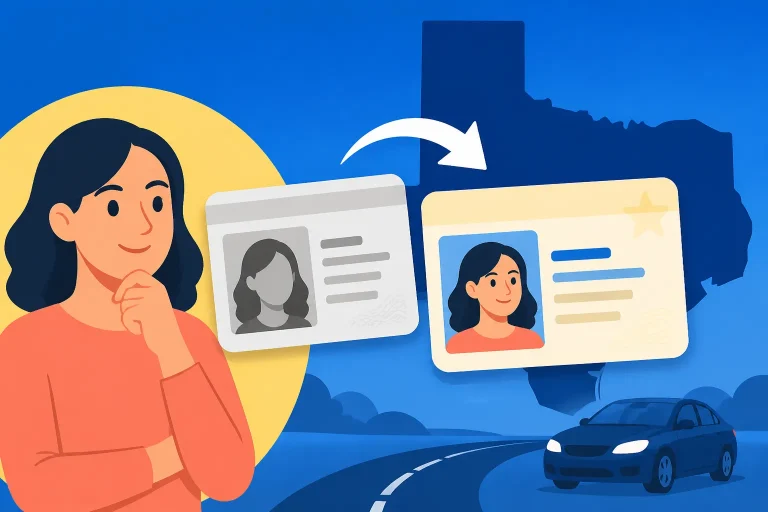
Before you book or prepare, be clear about which description fits you. “First Texas driver license” can refer to a person who has never held a driver license, or to someone who has driven elsewhere and is now applying for a Texas license. Those situations can involve different eligibility questions and supporting records.
You have never held a driver license
If you have never held a driver license, you are a first-time applicant. Your next steps depend on your age, education and testing status, and other details DPS uses to determine what is required. Do not assume that a course completion certificate by itself is a license application, or that completing a course online means the license process can also be completed online.
For a teen, the application may be part of a broader licensing path that includes learning, supervised practice, and testing. The steps and records can vary with the applicant’s circumstances. Start with Applying for a First Texas Driver License: Why Online Isn’t an Option’s related resources only when they address the applicant’s actual situation; for teen-specific planning, see Texas Teen Driver License: Required Documents for DPS and Guide to Getting a Texas Learner or Provisional License.
Adults who have not previously held a license should also confirm which course, test, and document requirements apply before scheduling. The requirements are not something to infer from a friend’s experience or a generic online checklist. If you are unsure whether a course is required or whether a test may be waived, check the current DPS instructions for your category.
You already hold a license from another place
A person who is new to Texas may have an out-of-state or foreign license. That person is not necessarily a first-time driver, but is still required to apply in person for a Texas driver license. The fact that you have driven before does not make an online first-license application available.
Your previous license and driving history may affect the documents and tests DPS requires. Avoid assuming that a license from another state or country automatically transfers without additional steps. Check the instructions for your specific license type and status, and bring the records DPS asks for.
For a move from another state, Are Adults With an Out-of-State License Exempt From Texas Tests? may help you understand the questions to verify. Drivers with a foreign license can review Driver License Options for Foreign Citizens and Visitors in Texas and, if relevant, Driving in Texas With a Foreign License Under Reciprocity Treaties. Reciprocity and eligibility depend on the circumstances, so verify the applicable rules directly with DPS.
Do not confuse a license with a state ID
A state identification card and a driver license are different credentials. If your goal is to drive, applying for an ID card is not a substitute for the driver license process. If you already have a Texas ID, ask DPS how it affects your application and what you need to do with the existing card.
The distinction can also matter for online services. A person who has an existing credential may have access to services that are unavailable to someone who has never held a Texas driver license. Do not treat an online option for renewing or replacing an existing credential as evidence that a first-time application can be completed online.
If you are deciding between a credential for driving and one for identification, read Switching Between a Texas Driver License and State ID: Step-by-Step and confirm which application fits your purpose.
Prepare before you go to a DPS office
A well-prepared visit starts with checking the current requirements for your exact category. The right records can depend on whether you are an adult or teen, whether you have held a license elsewhere, and what personal or legal circumstances apply. Since the in-person application is required, the goal of preparation is to avoid arriving without something DPS needs.
Confirm the requirements that apply to you
Begin with the official Texas Department of Public Safety instructions for your situation. Look for the application type, identification records, proof of eligibility, testing steps, and any education or consent requirements that apply. Do not rely on a checklist written for a different applicant category just because the title sounds similar.
If you are a new Texas resident, you may need to establish information about your identity, Texas residence, and lawful presence. Which records are accepted depends on your circumstances. These resources can help you organize questions: What Documents to Bring to a Texas DPS Driver License Appointment, Acceptable Documents to Prove Texas Residency for a Driver License, and Proving U.S. Citizenship or Lawful Presence for a Texas Driver License.
Treat those topics as preparation, not as a guarantee that every listed item will fit your case. If a document has an unusual name, is issued outside the United States, or does not match your current information, verify its acceptability before relying on it.
Check names, dates, and document consistency
A common source of confusion is a mismatch between records. Your application details, identification documents, and supporting records should tell a consistent story about who you are and your current circumstances. If your legal name has changed, or if a document uses a different name, find out what proof DPS requires before the visit.
Similarly, do not assume that a record is acceptable simply because it is official or because another agency accepted it for a different purpose. The licensing agency decides which documents meet its requirements. If you have a concern about an expired, damaged, or inconsistent record, raise it before your appointment rather than waiting until the counter.
For name changes, see Documents Needed for a Texas DPS Driver License Name Change. If your information is correct but a supporting document is missing, use the official checklist for your application type to determine what alternative records, if any, DPS accepts.
Clarify course and testing obligations
The education and testing steps depend on the applicant’s history and category. A teen, an adult who has never held a license, and a person transferring an existing license may not have the same requirements. Confirm what you must complete before the office visit and whether any test is administered by DPS or through another authorized process.
Do not treat an online driving course as proof that every licensing step is complete. Course completion, eligibility, appointment scheduling, knowledge testing, and the license application are separate matters. Keep any certificates or completion records that the official instructions tell you to bring, and verify that they are valid for the step you plan to take.
If a driver education provider is part of your plan, I Drive Safely may be one option to investigate for course-related preparation. Before enrolling, confirm that the specific course meets the requirements for your applicant category. A course provider does not issue a Texas driver license, and taking a course does not remove the required DPS office visit.
Arrange the appointment and travel details
Check the official DPS process for whether and how you should schedule a visit. Appointment availability and procedures can change, so verify them through the agency rather than relying on an old confirmation or another applicant’s experience. Make sure you select a service category that matches your purpose. A visit booked for the wrong service may not resolve your application.
Use the official office locator to find a driver license office and confirm its current hours. Do not assume an office handles every type of transaction or that a location’s hours have stayed the same. If you need help choosing the appropriate appointment category, consult DPS instructions before booking.
Prepare for the possibility that the visit involves more than handing in a form. Bring the documents requested for your application, any relevant course or testing records, and a way to resolve questions about your eligibility. If you are applying with a parent or another person, confirm whether that person must attend and what information they need to provide.
What to expect during the in-person application
The office visit is where you complete the required in-person application process. The exact sequence and services depend on your application type and current DPS procedures. It is sensible to arrive ready to explain what you are applying for and to provide the records requested for your case.
Check in for the correct service
When you arrive, follow the office’s check-in instructions and make clear that you are applying for a first Texas driver license or applying as a new Texas resident, as appropriate. If you have an appointment, keep its confirmation information available. An appointment is for a particular service; it does not necessarily mean DPS has already decided that you meet every requirement.
If your reason for visiting has changed since you scheduled, or you discover that you selected the wrong category, ask how to proceed. Do not assume an appointment for a renewal, replacement, or other transaction can be converted into a first-license application.
You can review What to Expect During In-Person Driver Licensing Visits for general preparation, and Complete Guide to DPS Driver License Office Procedures for broader context about office visits. Follow the current instructions from DPS at the time of your appointment.
Submit information and records
At the office, DPS will review the information and documents required for your application. Be prepared to answer questions or clarify details if a record is missing, unclear, or inconsistent. If you brought a document that is not accepted, ask what is needed to continue and whether the application can proceed without it.
Keep your own record of what you submitted and any instructions you receive. If the application cannot be completed during that visit, make sure you understand what remains outstanding and how DPS expects you to address it. Do not assume that leaving the office means the license has been approved or issued.
An in-person application is also not the same as a guarantee of a same-day card. Ask what temporary documentation or next steps apply to your situation, and use the official DPS information for any status questions after the visit.
Complete any required testing or other steps
Depending on your eligibility and prior driving history, testing or other requirements may be part of the process. The requirements are specific to the applicant; avoid assuming that everyone takes the same tests or that prior testing elsewhere will automatically count.
If a test is required, make sure you understand where and how it is scheduled, what records you need, and whether a separate appointment is necessary. If a course or outside test provider is involved, verify that the provider and the documentation meet DPS requirements before relying on them.
For road-test planning, see Driver License Testing: Written and Road Exam Guide and Taking the Texas Driving Skills Test: DPS vs Third-Party School. Those topics can help you prepare questions, but use the current DPS instructions to determine which testing path applies to you.
Online services that may still help
The fact that a first Texas driver license cannot be applied for entirely online does not mean online tools are useless. They may help with preparation or related tasks, but the specific service depends on your situation and the options DPS currently offers.
Eligibility checks and account tools
An eligibility tool can help you understand whether an issue may affect an application, but it is not a substitute for submitting the application in person. The result of an online check should be read in context: it may identify a requirement or point you toward a next step, but DPS makes the official determination.
If you have already used an online eligibility service, keep any result or instructions available and compare them with the current application checklist. If the guidance is unclear, contact or consult DPS before your office visit. Review Checking Your Texas Driver License Eligibility Online and How to Use the Texas DPS License Eligibility Portal when you need to understand what those tools are designed to check.
Account services may also be more useful after you hold a Texas credential. Someone who has an existing license may be able to access transactions that a first-time applicant cannot use. That difference is one reason search results about online renewal or replacement should not be mistaken for rules about an initial license application.
Appointment scheduling and document preparation
An online appointment system, if available for your transaction, helps reserve a time; it does not turn the application into an online transaction. Likewise, an online document checklist helps you prepare but does not guarantee that DPS will accept every record you select.
Make a short list of questions before using an online tool. For example: Does this service apply to someone who has never held a Texas license? Is it for a transfer, renewal, or replacement instead? Does it complete an application, or only help schedule an office visit? Those questions help prevent confusion between an online task and the required in-person application.
For appointment details, see Booking a Texas DPS Appointment Without a Current State License or Booking Your Texas DPS Appointment: How Far Ahead Slots Open, when relevant to your case. Verify appointment rules through DPS because availability and procedures can change.
Renewal and replacement are different transactions
Some people search for an online license application and find instructions for renewing or replacing a credential. Those services address people who already have a Texas license or ID and meet the conditions for the transaction. They do not establish that a person can obtain a first Texas driver license without an office visit.
If you already held a Texas license in the past, your situation may not be the same as a first-time application. For example, you may need to determine whether the transaction is a renewal, replacement, reinstatement, or a new application. Use the official DPS guidance to classify your case before you try to complete it online.
If you are replacing a missing card rather than applying for the first time, Replacing a Lost Texas Driver License Without the Audit Number may be relevant. If you are renewing, see Who Qualifies to Renew a Texas Driver License Online?. Neither topic changes the in-person requirement for a first Texas driver license.
Common mistakes and how to avoid them
The most preventable problems often come from mixing up different stages of the process. A little care before the office visit can help you avoid a wasted trip or an incomplete application.
Assuming an online account means the application is complete
A profile or login is not the same as an approved application. An account may provide access to certain tools without allowing a first-time applicant to finish the licensing process online. Check what each screen or confirmation actually represents.
If you receive a message that directs you to an office, treat it as an instruction to complete the required step in person. If you are unsure whether a task is complete, ask DPS rather than relying on an account status that may refer only to scheduling or eligibility.
Bringing a generic checklist instead of a case-specific one
A checklist prepared for another applicant may omit a requirement that applies to you or include documents that do not fit your situation. This is especially likely when a teen, adult first-time applicant, new resident, and foreign license holder are all described online as people seeking a “first Texas license.”
Start with the DPS requirements for your own category. Then compare any supplemental advice against those official instructions. If a checklist conflicts with DPS guidance, follow DPS or ask the agency to clarify.
Treating a course certificate as a license
Driver education can be one step in a licensing path, but it does not itself issue a driver license. Check whether your course is approved for the purpose you need and whether you must complete additional testing, submit records, or appear at DPS.
Keep course documents in the format DPS requests. If a provider gives you a certificate or completion record, verify that the information is legible and that the record corresponds to your application. Do not assume the agency has received it automatically.
Booking the wrong appointment or arriving without required records
A booked visit does not necessarily cover every type of driver license service. Before confirming an appointment, review the service description and make sure it matches your application. Then review the required documents again close to the visit, in case instructions have changed or you discover a missing record.
If you cannot get an appointment that fits your timeline, use the official DPS appointment and office information to understand your options. Avoid relying on unofficial claims about walk-ins or guaranteed service. An office’s actual capacity and procedures are for DPS to confirm.
Waiting until the visit to resolve a name or status issue
A name discrepancy, change in immigration status, or missing proof of residence can affect which records DPS needs. If something does not match, investigate it before your appointment. Bring the supporting documentation the agency requests and be ready to explain the difference.
For applicants whose lawful presence documents are involved, Proving Lawful Presence at Texas DPS During Status Changes may help identify the issues to verify. Use the current DPS requirements for your specific status rather than relying on a general example.
Frequently Asked Questions
Can I complete a first Texas driver license application online?
No. According to the Texas Department of Public Safety, people applying for a driver license for the first time must apply in person at a driver license office. Online preparation or appointment tools do not replace that visit.
I have a driver license from another state. Can I apply online?
No. New Texas residents must apply in person at a driver license office, according to the Texas Department of Public Safety. Your prior license may affect the documents or tests required, so confirm the process for your situation.
Can I use an online course and skip the DPS visit?
No. A course may be one part of an applicant’s preparation or education requirements, but it does not replace the in-person application. Confirm that any course you choose meets the requirements for your applicant category.
Does making an appointment mean my license is approved?
No. An appointment is a way to arrange a visit, not a decision that you meet every requirement. DPS reviews your application and records during the process and determines what steps apply.
What if I already have a Texas ID or had a Texas license before?
Your situation may be different from a person applying for the first time. Determine whether you need a new application, renewal, replacement, or another service, then check the current DPS instructions for that transaction. Do not assume an online option for an existing credential applies to a first-time license.
Sources
- Texas Department of Public Safety — Globe Icon (checked November 11, 2026)
Disclaimer
This article is for general informational purposes only and does not constitute professional advice. Laws, prices and regulations vary by location and change over time. Consult a qualified professional for guidance on your specific situation. Texas Driver Guide is not a government agency and is not affiliated with any state motor vehicle department.